In Roma Again

May 20, 2013

Two weeks ago, I purchased a new computer monitor to replace the dead Dell UltraBrite which had been in service about 7 years.  After much study, I selected the ASUS 23″ high definition model and I love it.  Wow, are prices going down…the old monitor cost something in the $600 range and this one was $216.
Last week, I was on the Roel Ramirez Ranch north of Roma (about 7 miles from the Rio Grande) conducting a workshop and photographing the bird life.  Roel has been getting things organized at the ranch and he is constructing new blinds.  There is a lot to do and it should be looking great by this coming fall.

About 4 inches rain soaked the area over the last 10 days, so the butterflies are hatching, too.  The headquarters butterfly garden was coming alive with butterflies and blooms when we left.  I may have some of the group’s photos to share with you in coming newsletters, but the following images should give you a good sense of what we captured.

Click 0n an image to enlarge and sharpen it.  Then click in the upper right portion of the photo to advance.
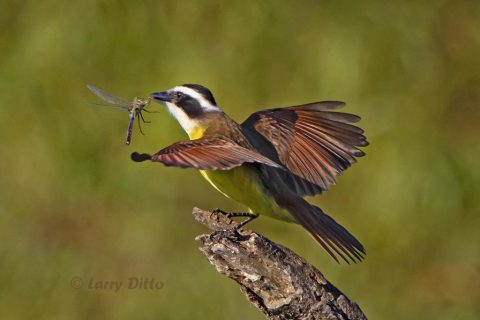
 

Plain Chachalaca eating the fruit of an Amargosa bush.


Plain Chachalaca displaying tail before take-off.


Painted Bunting sneaking through the black brush.


During the first two days of our workshop, the rain had left everything soaked and water was standing everywhere.  The birds just weren’t coming to the blinds.  By day 3, the area was dry again so, we saw many species including painted bunting.

Male painted bunting flushing.


Green Jay showing his excitement at our arrival.


The first groove-billed ani of the year arriving for a drink.


Common Ground-Dove displaying red under-wing as a warning to other doves... "keep your distance".


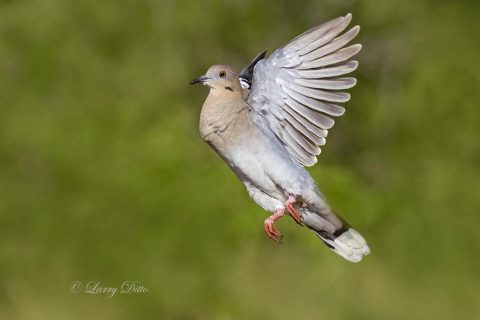
White-fronted Dove with egg shell stuck to her feathers.


First year male Hooded Oriole visiting the photo blind pond on a hot morning.

Yellow Warblers bathing at a ranch pond.


On day three of the workshop, we saw many yellow birds (Wilson’s warbler, male and female yellow warblers, male and female hooded orioles).  Most were photographed with the Canon 7D camera, 500 mm lens and 1.4X teleconverter on a Wimberley head and Feisol carbon fiber tripod.

Male yellow warbler on log.


Pair of long-billed thrashers arrive at the blind for water and food.


Drab little olive sparrow after a bath.


A sure sign of spring...northern cardinals bonding through feeding ritual.


Male painted bunting singing.

One more singing painted bunting.


Bird photography will be good all the way through June, so you still have time to grab a couple bottles of water and get down to south Texas where these birds congregate.  Every ranch offers excellent photography… Dos Venadas Ranch, Tacubaya Ranch, Santa Clara Ranch, Laguna Seca Ranch, Martin Refuge and Isaac Garza’s Tepeyac Ranch.  I hope to see you soon.

Larry


Block Creek Natural Area Instructional Photo Tour

May 9, 2013

Seven of us photographed in late April near Fredericksburg, Texas in the hill country at Block Creek Natural Area with hosts Sharron and Larry Jay.  The Jays had installed two new blinds earlier in the year and both had good numbers of birds.  For four days, we worked the blinds, photographed hawks and owls presented by “Last Chance Forever” raptor recovery group, and worked the area’s many hummingbirds with my flash setup.  We had good luck at all these locations, but the breeding birds had not arrived in huge numbers as they usually do by mid-April.  As the week came to a close, two photographers joined me for an afternoon while we refined our Photoshop skills.

The food and lodging at Block Creek Natural area were superb, as always.  That and entertaining conversation around the dinner table kept things lively and fun.

Check the photos that follow to see a variety of what I photographed.  This is just a small sample of what the group captured during the photo tour.

Remember, just click on a photo to open it in a larger, sharper format.  Then move your cursor to the upper right portion of a photo to advance.
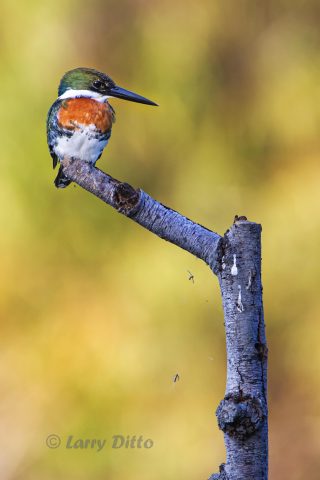
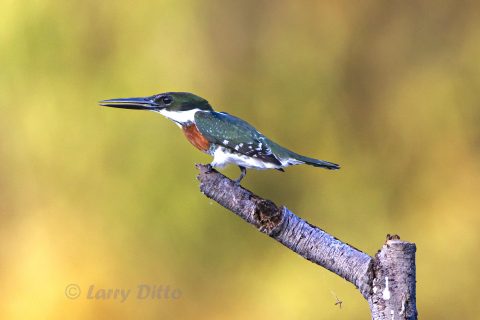
Scissor-tailed Flycatcher pair getting ready to nest.

These scissortails landed on a fence near Larry Jay and me on the last afternoon of the photo tour.  The capture was with a Canon 1D mark IV, 500 mm lens. 1.4 teleconverter, Feisol tripod and Wimberley head, ISO 500, 1/3200 second @ f5.6.

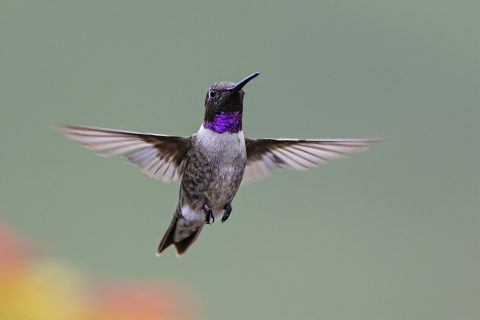
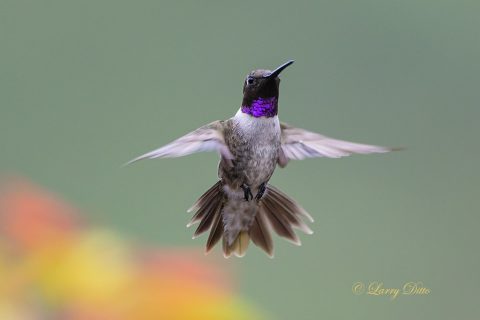
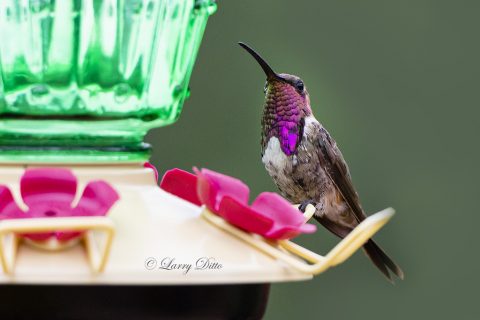
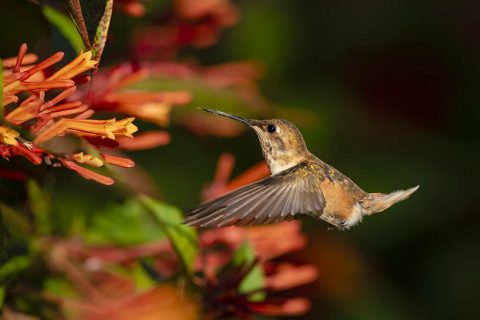
Female black-chinned hummingbird feeding.


My time at the hummingbird setup was limited to a few minutes to get the flashes adjusted.  After that, the other photographers occupied every minute at the set and captured hundreds of amazing shots.  I’ll get there a day early next year.  There were many opportunities to photograph hummingbirds around the headquarters flower gardens, so that is where I went after being ousted from the setup area.

Male black-chinned hummingbird guarding his territory near some trumpet vines.


Windmill and full moon in front of the Block Creek Natural Area bed and breakfast.


During our first evening at Block Creek NA, some of us captured the rising moon and a flock of purple martins headed to roost.

Purple martins making one last flight before coming back to the nest box for the night.

Black vulture landing on handler's glove.


The Harris's Hawk doesn't always return to the handler's glove.


Harris's hawk landing by yucca.


I cloned the jesses off the legs of this captive hawk.

Great horned owl with rat for dinner.


Canyon wrens were nesting in the Jay's barn.


Carolina wren drawn to photo perch with mealworms.


Red-tailed hawk surveying the grasslands near a Block Creek NA barn.


Male eastern bluebird singing on breeding territory.


Fence lines around the Block Creek NA area are always active with colorful birds like this painted bunting.


Chipping sparrows frequent Block Creek feeding perches.


Pine Siskin perched on blooming buckeye.


The buckeye trees along Block Creek were blooming in late April and afforded beautiful perches.  Most Texans probably don’t know the buckeye is native here, although the hill country trees are a different species from those in the eastern U.S.


House finches were common at each of the photo blinds.


Beautiful male Painted Bunting eating millet seeds.


Vermilion flycatcher looking for insects on the wing.


You can see that we had a great variety of birds in the Texas hill country this year.  Many more arrived after a spring cold front blew through central Texas three days after we departed.   Timing is everything, but we had plenty of good shooting.

Larry


Splash of Color on South Padre

May 4, 2013

Yesterday, (Dr.) Beto Gutierrez and I got up with the dawn and headed to South Padre Island for what we were sure would be a big day of photographing songbirds in migration.  We weren’t disappointed even though a 30 mph wind was blowing out of the north.  Many species went un-photographed but following this paragraph are a few samples of what we captured.  Some of these shots are on a log perch furnished by photographer Stephen Sinclair and some are on natural perches.  As always, the color splash was fantastic as we got birds with red, yellow, blue, orange, black, white, green, etc.  and that was just the warblers and tanagers.  Very few grosbeaks and orioles were in the area after last week’s big fallout.

View these photos by clicking in the upper right portion of the shot to make it larger and sharper.  You will see the advance button, just click it to bring up the next photo.

Male Indigo Bunting in the Convention Center habitat.


Prothonotary Warbler male with meal worm.


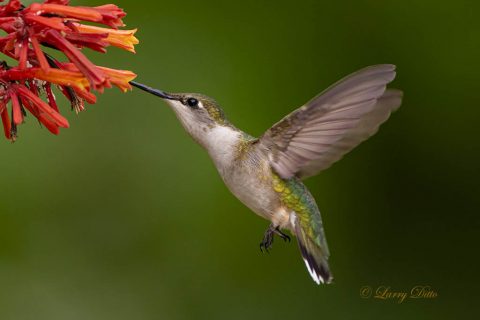
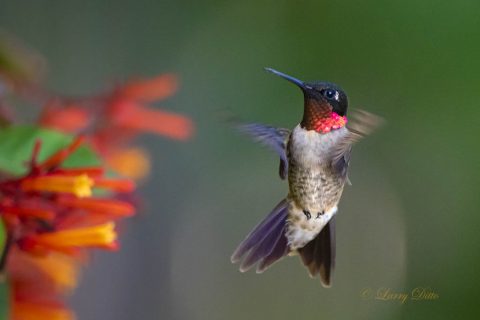
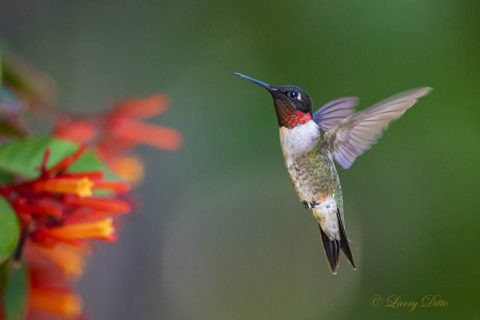
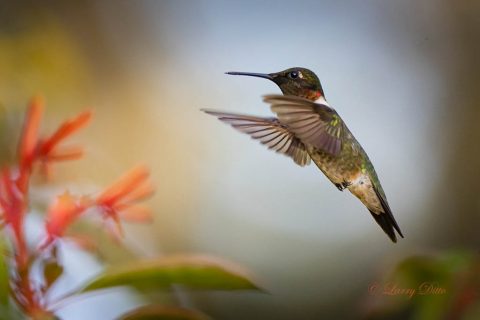
Ruby-throated Hummingbird chasing another male.


Juvenile Bay-breasted Warbler perched in Convention Center woods on South Padre Island.


Cape May Warbler male foraging in tepeguaje tree.


Tennessee Warblers feeding on insects and insect eggs in a mesquite tree.


Black-and-White Warbler checking under tree bark for insects and other invertebrates.


Chestnut-sided Warbler grabbing a mealworm and jumping into the air before another bird can snatch it away.


A "still" Chestnut-sided Warbler on the hunt for food.

Western Tanager male


Worm-eating Warbler resting in a small habitat before heading north.


Yellow Warbler male about to snatch a bug from the leaves.


All of these photos were captured with a Canon 1D Mark IV, Canon 500 mm lens, 1.4 X tele-extender, extension tube (25 mm), Canon 580 flash, Feisol tripod and Wimberley head.  I always have aching shoulders at the end of a photo day, but it takes all this equipment to get these kinds of photos.  Most of these birds were photographed at 1/800 to 1/1250 second in the shade.  You will recognize the daylight shots.

Thanks to all the volunteers who feed the birds as they rest in the small habitat on the island and special thanks to Will and Jill Carter who started planting these trees almost two decades ago.

I hope you enjoyed the spring migration.

Larry

Padre Island Fallout

April 23, 2013

Two good cold fronts have hit South Padre Island in April; the first had little affect on the numbers of spring migrant birds stopping to refuel and rest until the wind returned to the south.  Then, a blast of cold air hit us last Thursday just as peak numbers of birds were crossing the gulf and we saw a pretty good fallout on the island.  Friday’s winds were above 30 miles per hour most of the day so I waited until Saturday for calmer weather.  Wow, it was wonderful?  Lots of Baltimore orioles, indigo buntings, scarlet tanagers and rose-breasted grossbeaks were there along with a few warblers, dickcissels, western tanagers, summer tanagers and yellow-billed cuckoos.

Eager to make an extra buck off their spring visitors, the city of South Padre Island had scheduled a motor cycle rally right next to the best bird habitat in town.  That’s right, several hundred Harley’s were rocking and rolling and rumbling as the birds tried to settle in for a day of rest.  Lest we forget or seem biased, I must say there were several hundred birders and photographers there to do there part.  In spite of all the noise, the birds were focused on eating and seemed to ignore us.

I’ve photographed these fallouts for several years, so my camera wasn’t smoking, but my friend, Allen Dale, captured over 2,000 images on Saturday.  At the end of the day he was satisfied that most of the species were well represented on his flash cards and I had enjoyed a good visit with many other old friends who venture out each April to share the migration experience.

Here are a few of the image captures from my cameras on Saturday.   Just click on a photo to make it larger and sharper for viewing.  In the upper right corner  of each, you will see a “next” button that allows you to click through the slide show.

Male Western Tanager in flight.

My favorite photo of the day was this tack sharp Western Tanager male who flew right at me as I was ripping off a blast of digital captures from my Canon 1D Mark IV.  The camera is amazing in its ability to focus quickly and anticipate the advance of birds in flight.  The shot was done at 1/4000 second at ISO 800 with the Canon 500 mm lens, 1.4X teleconverter, Feisol carbon fiber tripod and Wimberley head.

Cerulean Warbler feeding at the South Padre Island Convention Center.

Cerulean Warblers are one of the rarest birds to make a spring visit to South Padre Island.  The photo above was a lucky shot at the Convention Center where some of the walls are painted funky colors like pink, yellow and ocean blue.  You have to admit, the wild color gives this photo an artistic look.  I really like the pose.

Male American Redstart foraging for insects.

It is almost impossible to get an American Redstart to hold still, even for a second.  When I can get one in the viewfinder, I just lock focus and shoot a blast or 4-5 captures, hoping one will include a good pose.

Painted Bunting male perched near the shadows.

Painted Buntings  seem to be a favorite among the birders and photographers.  This one held still for several photos.

* If you want to photograph painted buntings, call or email me soon.  They are fairly common in south Texas during the summer.  I’ll put you on one or two or three at one of the local photo-ranches.

Western Tanager feeding on insects in a mesquite tree.


Saturday, April 20 was a good day for Baltimore Orioles.


Scarlet Tanager on the fence at Valley Land Funds habitat on Sheepshead street.


Dickcissel looking for seeds on Sheepshead street.


Tennessee Warbler, the plainest bird in town.

Tennessee Warbler, the plainest bird in town.

Rose-breasted Grosbeak male, one of my favorites.

Indigo Bunting resting a moment during its search for seeds.

Many thanks to all the great volunteers who put out bird seed and oranges to help sustain the thousands of hungry birds during their South Padre Island layover.

By Sunday, the wind had shifted back to the southeast and most of the migrants were on their way again.  If we get one more front before May 10, I hope to be back at the island for the final fallout of the season.

Let me know if you enjoyed this little trip the island.  It was incredible!

Larry


Spring Photography on Galveston Island

April 16, 2013

Most of last week, I was in the Galveston, Texas area to lead several nature photography workshops and field trips.  All were part of FeatherFest, an annual event that attracts birders and photographers from around the country and the world.  My outings included San Luis Pass, Galveston Island State Park, and High Island (done on my own).  Surprisingly, we saw only a few of the various neo-tropical migrant birds (warblers, buntings, tanagers, vireos, etc.) which should have been “falling out” in the area in mid-April.  It was the resident birds that made our visit so successful.

Weather for FeatherFest was exceptional and included some great sunsets and sunrises.  The photographers at this year’s festival exhibited exceptional interest and focus when we were working on the beaches and dunes.  When we (tour group leaders) suggested a ground level position for photographing shorebirds, the photographers went to the sand like veterans.  If we spotted a bird in the marsh, everyone waded right it.  It is always fun to work with photographers who will go the extra mile to get exceptional photos.

Here are some of last week’s photos:  Click on a photo to enlarge and sharpen it.  Advance by clicking in the upper right portion of the photo.

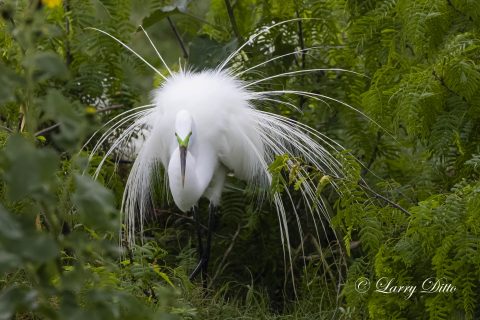
Great Egrets were nesting in abundance at the Audubon Society's High Island rookery.


The High Island rookery photos were captured with the Canon 1D Mark IV camera, Canon 500 mm IS lens, Wimberly tripod head, and Feisol tripod.  Contrary to what we’d heard, we were permitted to use tripods while photographing at the rookery.

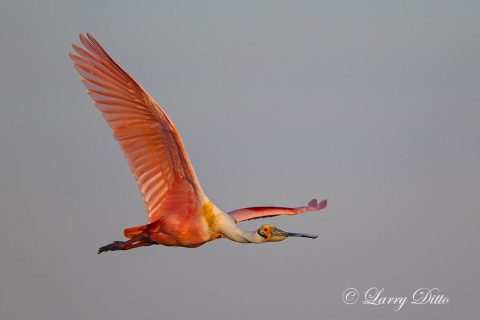
Roseate Spoonbills and a neotropic cormorant balancing on tree branches between flights to gather nest material.


Great Egret landing near nest.


At Galveston Island State Park the weather and bird diversity were exceptional.  On the first morning out, we were greeted by a variety of shorebirds, ducks, night herons, roseate spoonbills and other wading birds.


Yellow-crowned Night-Heron wading the shallows near Galveston Bay in the Galveston Island State Park.


Lesser Yellowlegs and Laughing Gulls were part of the array of birds we photographed at Galveston Island State Park.


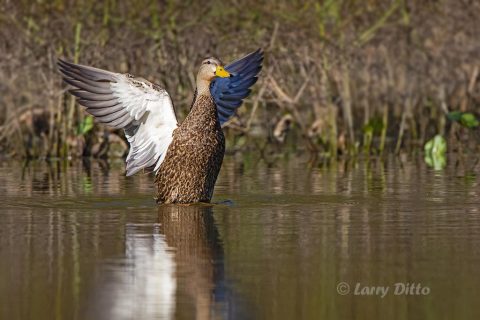
Mottled and Black-bellied Whistling Ducks were waiting for us at Galveston Island State Park.


Our photographers had to share the gulf-side beach with more casual visitors, but most got some great bird pics.


Dozens of Sanderlings scurried about the wet beach at Galveston Island State Park.


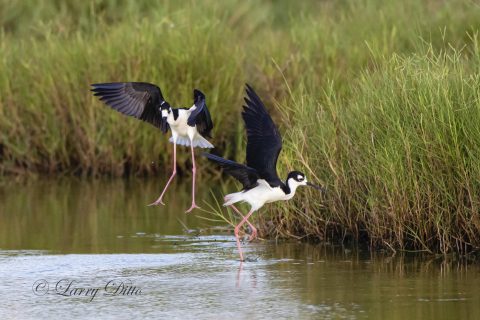
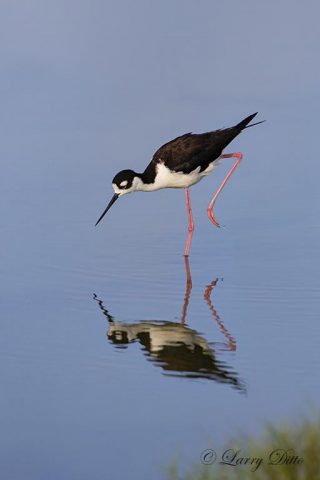
Black-necked Stilt landing in the salt marsh on the bay side of the island.


Forster's Tern hovering over Galveston Bay at sunset


Fishermen shared the beach with our photographers at San Luis Pass but the birds seemed to be used to all the human activity.


Beach Evening Primrose on the dunes at San Luis Pass


Herring Gull and Sanderling sharing breakfast on the beach.


Willet in the morning sun.


Laughing Gull take off.

Chasing gulls in flight was the best way for the class to learn the basics of action photography.  I sat on the beach while hand holding the camera and 500 mm lens to get this take-off shot of a laughing gull.

My next workshop at the Block Creek Natural Area near Fredericksburg is full, but I hope you will consider it for next year.  Eastern bluebirds, painted buntings, summer tanagers, hawks, owls and more await our arrival.

Images for Conservation’s Pro-Am photo shoot at Tacubaya Ranch (tacubayaranch.com) near Edinburg, Texas will be here soon (May 9-11) so get signed up at their site or with me or at ICF’s web site (ICF.com).  I’ll be the coach for that one and we still have room for 4 photographers.

Then, May 16-18 I will be at the Ramirez Ranch in Roma, Texas for butterflies, south Texas songbirds and hawks.  If you are interested, check my web site for details.

I hope you enjoyed this trip to Galveston Island.

Larry


Back From Big Bend

April 4, 2013

After a week in Big Bend National Park, I can’t help but feel humility having been in the presence of so much natural beauty.  The desert was incredible and the weather, the landscapes, the wildlife and the camaradrie couldn’t have been better.  Joe Zinn and I lead a 4 day instructional photo tour to west Texas that was spectacular.

We were stopped dead in our tracks (tire tracks) by a sow black bear with four cubs crossing the highway as we drove into the park’s Chisos Mountains.  On our second night out, we almost collided with a white-nosed coati and a gray fox.  Obviously, it wasn’t just the landscapes that left us inspired.  One of the park campgrounds had at least 4 pairs of vermilion flycatchers.

All of the following landscapes were photographed with a Canon 5D Mark II camera, Canon 16-35 and 24-105 mm lenses, polarizing filter, two stop neutral  intensity filter, cable release, Feisol ball head and Gitzo 1348 carbon fiber tripod.  For the bear and birds, I was using the Canon 1D Mark IV camera and Canon 500 mm lens.

So, take a photo tour with me and enjoy this small selection of photos that I think pretty much tell the story of our trip.

Our photography journey began with a walk to “The Window” in the Chisos Basin at Big Bend National Park for an incredible sunset.

Click on the upper right portion of a photo to make it larger and sharper for viewing.  From there, you can advance through the Big Bend photography.


Sunset through "the window" in the Chisos Basin.


Photographers preparing to capture the grandeur of a sunrise on the Rio Grande.

Rio Grande at sunrise.

Sunset at Terlingua Cemetery

Riffle in the Rio Grande, sunrise in Santa Elena Canyon.

Everybody waded in to capture this shot below a small check-dam of rocks below Santa Elena Canyon at sunrise.   A shutter speed of less than one second give the  current a soft, foamy look.

While returning to the road from capturing the boulder shot above, I watched an incredible sunset over Santa Elena Canyon and a large prickly pear cactus.

Boulder and ocotillo at Cerro Castalon.

Prickly pear and ocotillo, sunset near Santa Elena Canyon.

Shadow highlighting ocotillo at Keyhole rock.

This rock looks more like a lion’s head or the Sphinx than a keyhole, don’t you think?

Michigan photographer, Tom McLinden, looking for a fresh angle near the Keyhole.

Ocotillo on canyon rim at sunrise.


Near the park’s west entrance, ocotillos guard the rim of a canyon that reminded me a lot of the painted desert with it’s yellow and gray clay strata.

Prickly Pear in bloom as a storm brews at Boquillas Canyon.

Never leave a workshop early if you don’t want to miss something special.  All our students headed home a few hours too soon during the last afternoon of the workshop.  Joe and I captured these images as a storm approached Boquillas Canyon.

Lightning striking the Boquillas Canyon rim at sunset.

Spirits of ancient Native Americans come alive at sunset where they once ground mesquite beans, fruits and roots on the rocks above the Rio Grande in Big Bend National Park.


Black bear mother with reluctant cubs where their trail crosses a Big Bend Park highway.


Some of our photographers, including the trip leader, couldn't resist a bird-photography break from the landscape shooting.


I hope you enjoyed this trip to the Big Bend.  Look for us to try it again next spring.

Larry


Some South Texas Parks

March 7, 2013

This past week, I finally got out to do some shooting at a couple of local parks, South Padre Island Birding and Nature Center and North American Butterfly Assoication’s National Butterfly Center.  Spring in south Texas (yes, it’s spring here) may require a photographer to lean a little into the wind, but these habitats compensate with their abundant birds and butterflies.  March 2 was brisk and windy so the birds stayed close to shore or flew to the freshwater ponds at the Nature Center’s boardwalks.  We were working on our second 16 gig cards before the winter Texans got out for their morning boardwalk stroll.  Just before sunset, we were treated to a half hour of great blue heron fishing along the Laguna Madre boardwalk.

Yesterday’s weather was much more accommodating with a gentle breeze and morning temperatures in the 50s and 60s.  At the National Butterfly Park near Mission, Texas the butterflies were active in the morning sun.  My body wasn’t ready for the crawling and bending required to get photo-close to the smaller butterflies, but it was a lot of fun (I’ve got to get back in shape for butterflies after a two year lay-off during our extreme drought.)  I was surprised to see so many nice birds (great kiskadees, green jays, chachalacas, altamira orioles and clay-colored thrushes) at the center, as well.  To compensate for the morning’s exertion, we sat and photographed birds through the late afternoon.  It was all a blast.

Here is a good selection of photos from these two days of photography at south Texas parks.  Enjoy.

Click on the upper right portion of a photo to make it larger and sharper.  Then click in the lower right or left zone to go forward or backward through all the photos.

Belted Kingfisher hovering in the wind while searching for prey.


My “new” Canon 1D Mark IV has proved to be “as advertised” with its ability to lock on flying targets in a heartbeat.


Brown pelican on the Laguna Madre.


Normally, I would select a shot with full up or down wing positioning, but I liked this one because the folded wing provided a shadow to highlight the brown pelican’t magnificant head.


Drake northern pintail headed for calm waters on a windy day.


"Hundred Mile Per Hour Redhead" landing in freshwater marsh at South Padre Island.


I was panning way too slow for the bullet-like redhead, but I liked the composition that includes a boardwalk photo blind in the background.  Note the Laguna Madre in the background.

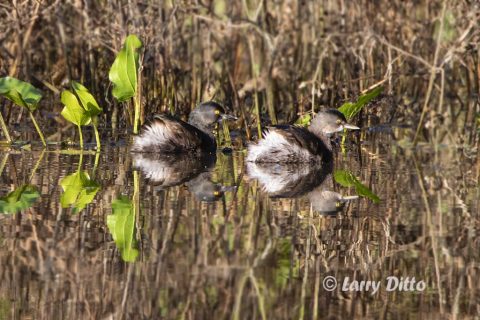
Pied-billed Grebe stretching his wings.


Roseate Spoonbill diving into a cattail marsh to escape a hard north wind on the Laguna Madre.


White Ibis about to hit full breeding plumage.


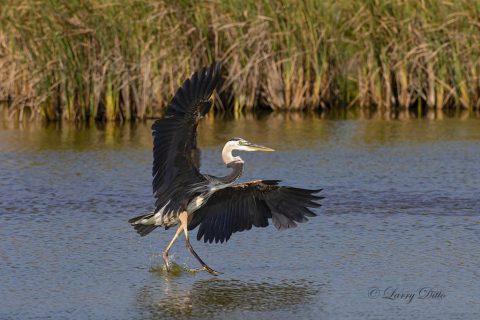
Great Blue Heron with large Tilapia in the Laguna Madre marsh at sunset.


Redhead duck against an orange sky at sunset over the Laguna Madre, Texas.


Great Blue Heron headed for the shallows at sunset.


Most of the South Padre Island photos above were done with the Canon 1D Mark IV, 500 mm IS lens, Feisol carbon fiber tripod and Wimberley head.  The shutter speed was never lower than 1/1250 second and most of the time, it was 1/2000 second or better to freeze the motion.

Below, I used a Canon 7D (with its 1.6 magnification factor), Canon 300 mm f4 IS lens, Canon 1/4 tele-extender or Canon 500 Close Up lens, Gitzo carbon fiber tripod and Feisol ball head for the butterflies.

Ceraunus Blue warming in morning sun.


Hairy fly feeding on a daisy bloom.


The two shots above were done with the close-up lens screwed on the front of the Canon 300 mm f4 lens.  In both shots, the insect was closer than one foot.  I didn’t use enough depth of field for the butterfly but I was trying to keep the backgrounds blurred.


My nemesis, the clay-colored thrush peering from behind a stump.


Altamira Oriole in a nice "bird on a stick" pose.


I have one more photo for you, the now famous Flamulated Owl of South Padre Island.  This bird has spent a month or two hiding in deep cover at the Convention Center.  On this day, it decided to roost near the thicket’s edge and the birders located it.  Thanks to the guy who told us… a Texas “Longhorn” no less!  Good thing I wasn’t wearing my maroon and white that day.


This flamulated owl would easily fit in your coffee cup.


Here’s wishing you good days afield in the Lord’s creation,

Larry


Back to Big Bend and Around Home

February 11, 2013

Yesterday, Paul Denman and I traveled to Corpus Christi, Texas to meet with about 50 photographers and landowners who will participate in the 2013 Coastal Bend Wildlife Photography Contest.  Paul reviewed a number of important items in Photoshop which each photographer will need to prepare images for competition.  I talked with landowers and photographers on the importance of developing a strong partnership during the competition.  As the day came to a close, we gave the group a number of tips on how, when and where to get the better photos.  The audience really got into the swing of things when I shared my experiences on what the judges will be looking for as they select the winning shots.  Good luck  to all the Coastal Bend photographers and landowners.

Recently, I made a few images at South Padre Island including a shot of the elusive American bittern.  It’s not a good photo but at least it finally stood up and allowed me the chance to get one or two captures.  My luck was also running pretty thin as I tried to catch a pair of bald eagles on the sensor early last week.  I say this every year, but next year I will be there in early January with the hope of getting the adult eagles while they are actively feeding and tending their young.

The last images in this week’s newsletter are from the Big Bend National Park area where Joe Zinn and I will lead an Instructional Photo Tour in late March.  If you are so inclined, come on and join us.  We still have space for two photographers.  Check the details on Joe’s or my web sites…photozinn.com or larryditto.com.

To view the following images just click in the upper right area of a photograph and it will enlarge and sharpen for better viewing.  From there, you can advance or back up by clicking on the “next” and “previous” commands in the upper right or left area of any photo.

Bald eagle with nest material.


The eagle photo above was done from a tripod using a Canon 1D mark IV and 500 mm IS lens.  The shot below was also hand-held and I had the Canon 7D body on the 500 mm lens.


Bald eagle soaring near nest in central Texas.


American bittern hiding in thick salt marsh vegetation on South Padre Island.


Brown pelican take off on the Laguna Madre at sunrise.


Low flying drake pintail on the Laguna Madre.


Reddish egret chasing his dinner near the South Padre Island boardwalk.


Pipevine swallowtail butterfly nectaring on Mexican flame vine at the South Padre Island Convention Center.


When the shooting hits a mid-afternoon lull on South Padre Island, I can usually find butterflies in the Convention Center habitat.


One of many Queens on the flame vine

The Big Bend National Park images were done with the Canon 1D mark III and 16-35 mm lens, Gitzo tripod, Arca Swiss mono-ball,  and polarizing or Singh Ray split neutral density filters.


A photo tour to Big Bend National Park would not be complete without seeing the "Mule Ears" formation.

Ruins of a homestead just above the Rio Grande across from cliffs in the Sierra del Carmen, Mexico.


Ridges of volcanic tuff looking toward the Chisos Mountains at night, Big Bend National Park.


The Boquillas rim, Mexico at sunset in Big Bend National Park.

More From the Whooping Crane Trip

January 30, 2013

Once I had time to go through all the whooping crane trip photos from early January, I decided to offer a few more images here.  I hope you don’t mind.  I’ll be out looking for birds and landscapes next week, so the subjects will be a little different.  Let me know what you think about these.  If you like the idea of trying these birds, we will be running the tour in mid-December in 2013.  That should produce a little better weather and all the whoopers will be here by then.  Let me know if you want to join that trip and I’ll get you on the list.

Just click on any photo in the upper right corner area to make it open in a larger, sharper format.  Then you can advance or go in reverse for more photos.

Brown Pelicans loafing on pilings by the Aransas National Wildlife Refuge.


Even with some rain coming down, several of us got this nice pose of brown pelicans on pilings.  By using a layer mask technique, I was able to brighten the birds and darken the gray sky a bit to help the birds “pop” a little more.  I keep a camera with the 100-400 mm lens on a sling around my shoulder for shots like this.  We approached the birds quickly but I was able to rip off quite a few shots as we passed them because the second camera was handy at arm’s length.


Goose Island State Park fishing pier after sunset.


By panning from a speeding boat, I was able to keep the focus point stable and get an acceptable shot of the Goose Island Park pier (above) well after sunset… 1/30 second, ISO 1600 with some noise reduction in Adobe Camera RAW.

Willet landing on oyster bar.


After a morning of crane photography, we worked our way back to the docks by drifting up to several oyster bars.  As usual, there was a the wide variety of birds watching the boat traffic.  As the shots above and below attest, we were able to get flight shots of willets and American oyster catchers.  I try to keep the shutter speed close to 1/2000 second when shots of flying birds are likely.  That is a good speed for stopping wing motion.

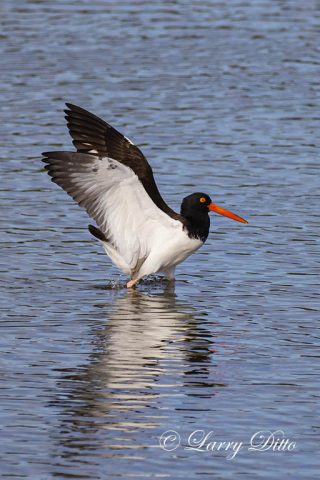
American Oystercatcher on take off from oyster bar in Aransas Bay.


The oyster catcher was photographed with a Canon 7D and 500 mm IS lens, hand-held.  With this type of shooting, it isn’t always possible to get the light and wind at optimum angles, but some really nice shots can result if things fall into place.

Turkey Vulture soaring over the Aransas Refuge marsh.


Whooping cranes were our the prime photo target, but most of us remained ready to capture a few images of just about anything within range.  This vulture glided past us several times.


Whooping Crane adult and young, 30 yards from our cameras on the last morning of the photo tour.


Whooping Cranes flying across the marsh in golden light.


A pair of sandhill cranes joined these whoopers at the roost.


As we watched their backsides from the south, this group of whoopers and sandhill cranes landed into the north wind, offering a shot that was far from ideal but, nevertheless, interesting.


Cranes landing in marsh well after sunset.


Shame on me for not being prepared for these whoopers (above) as they landed after sunset.  My ISO was still set at 400.  At ISO 1000, this could have been a very nice capture.  Note the stand of old live oak in the background.

Whooping Crane family flying low and close to our boat.


Several of you liked a similar shot in the last newsletter, so I decided to share another frame from that fly-by.  During this photo tour, we had a couple of evenings when the sky was incredible.  With 6 photographers keeping their fingers crossed as the sky turned to orange and gold, something good had to happen.  Patience paid off and everybody got a good burst of shots at these guys.

Thanks for dropping by to take a look.

Larry

Whooping Crane Photo Tour Completed

January 15, 2013

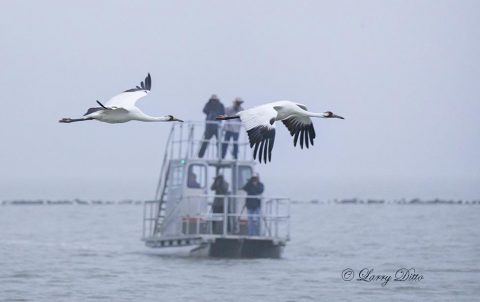
I just completed my 7th or 8th (I lost count) Rockport, Texas Whooping Crane Photo Tour with a wonderful group of photographers from Texas and California.  The tour always provides much more than just whooping cranes; certainly this year was no exception.  Below, you can see some of the many birds and landscapes we captured as digital images.  Many of the images were made from the deck of a chartered boat that took us right where we wanted to go and for as long as we wanted to be there.

When we weren’t photographing, we were eating seafood, comparing photography ideas, and swapping stories of past adventures.  Rain slowed us down a little on the first day, but the sunset on day two was well worth the wait.  After watching 11 whooping cranes fly in to roost, we were spellbound with the magnificent orange, red and yellow glow on a scattering of clouds as nightfall forced our retreat to the dock.

Whooping crane numbers were near record highs and the tall, white birds were sharing the marshes with many other species, so many photo subjects were always at hand.  Check out the photos below and plan to join me soon on a photo adventure to Block Creek Natural Area or Big Bend National Park.

Of course, it’s not too early to book for next year’s whooper trip.  Just visit my photo tour schedule at www.larryditto.com.

To enlarge and sharpen the following photos for viewing, just click on the upper right area of any photo.  From there, you can advance through the other images.

Adult whooping crane wading the edge of Aransas Bay, Texas.

The photo below was made with a Canon 1D Mark III and Canon 100-400 mm lens, handheld.  All other bird photos were done with the Canon 7D and 500 mm lens from a Feisol carbon fiber tripod with Wimberley head.

Flock of white ibis flushing from the salt marsh.


Mom captures a blue crab for junior as a crane family feeds in the marsh on Saint Charles Bay.


American Oystercatcher stretching its wings on an oyster bar in Aransas Bay.


Osprey flying through fog with a sand trout.


Crested Caracara shaking water droplets from his feathers while perched in the Aransas NWR marsh.


Adult whooping crane approaching the shoreline while hunting for blue crabs.


Drake blue-winged teal bathing in fresh water at Aransas Pass.


Juvenile northern shoveler landing on a pond at Aransas Pass.


Brown Pelican flying across the salt marsh at sunset.


The rusty-orange head really shows on this juvenile crane taking flight.


Whooping Cranes headed for the roost.


Whooping Cranes and greater sandhill cranes landing in the salt marsh.


Sunset on the salt marshes as whoopers move toward shallow water to roost.


A pair of endangered whooping cranes flying into roost after sunset.

The following images was hand held using a Canon 5D Mark II and 16-35 mm lens.

Waiting for the last light means photographers experience some incredible sunsets on the edge of the bay.


I hope you enjoyed the images of a great trip to the Texas coast.

Larry